
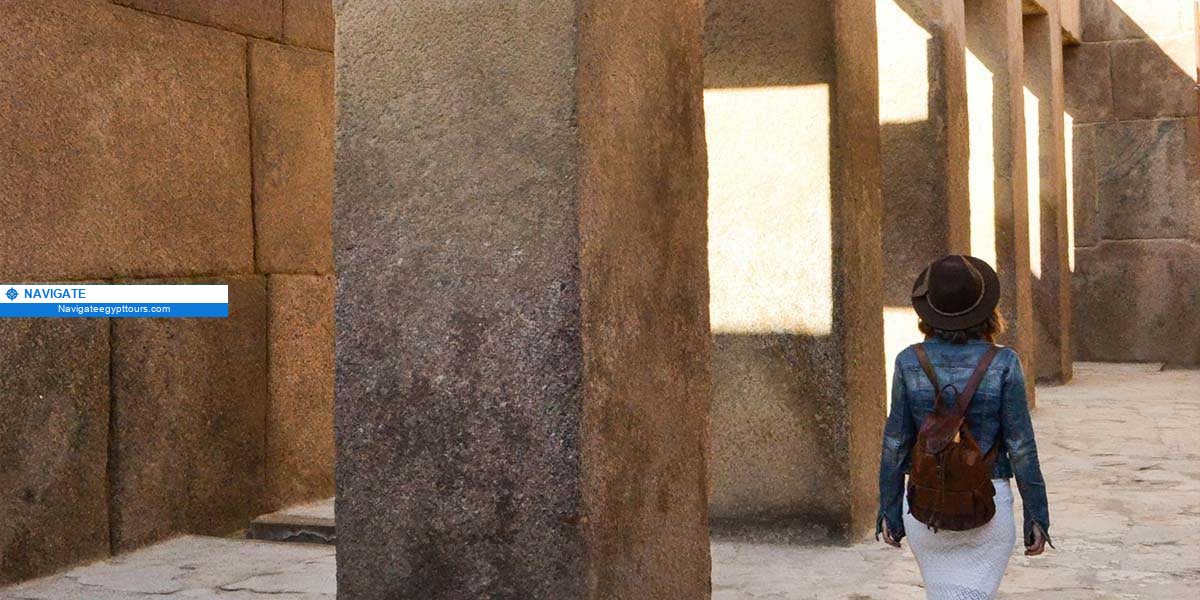
The Valley Temple of King Khafre, built around 2570 BCE near the Great Sphinx, was a key funerary site for mummification and afterlife rituals. Made from massive limestone and granite blocks, it features a T-shaped hall and once housed over 20 Khafre statues. Aligned with celestial bodies, the temple reflects the spiritual depth and architectural brilliance of ancient Egypt’s Old Kingdom. The Valley Temple of Giza: A Monument of Power and Purification
Summary
The Valley Temple of King Khafre, located at the foot of the Giza Plateau near the Great Sphinx, is one of Egypt’s best-preserved ancient temples. Built during the 4th Dynasty (2570 BCE), this mortuary masterpiece served as the site of mummification and the "Opening of the Mouth" ceremony to prepare the pharaoh for the afterlife. Constructed with massive limestone and granite blocks, it features a T-shaped hall with alabaster flooring and once held over 20 statues of Khafre. Architecturally aligned with celestial bodies, the temple represents ancient Egypt’s profound spiritual beliefs and engineering genius.
Today, it remains a monumental testament to the religious and cultural sophistication of the Old Kingdom. The Valley Temple of Pharaoh Khafre is a mythical creation of celestial art that held the power to achieve immortality and acquire a magical path leading to the house of the gods, the field of reeds. It is an incredible archaeological site that provides valuable insights into the fascinating world of ancient Egyptian culture, ancient Egyptian religion , and ancient Egyptian craftsmanship . It played a pivotal role in the funerary rituals and afterlife beliefs of the pharaohs , as it was the center where the mummification process took place to unite the body and soul of the ancient Egyptian royalty of the 4th dynasty.
This integral mortuary temple of the Giza pyramids complex was a gateway to a new dimension of miraculous wonders that can bring to life some of the greatest tales ever told about the glorious pharaohs, ancient Egyptian gods , and magnificent figures.
The Grand Location of the Valley Temple of Pharaoh Khafre
Dec 20, 2018
Ancient Egyptian Temples
Witness all the magical temples of the ancient Egyptian civilization Read More
Explore Rich History of the Valley Temple of Pharaoh Khafre
The valley temple was built as part of the pyramid complex of King Khafre, where the opening of the mouth ceremony was performed when the soul “Ka” entered into the mummified deceased person’s body. The valley temple, with time, was buried by sands until it was unearthed and discovered by the French Egyptologist Auguste Mariette in 1852, which explains why the valley temple was very highly preserved. It was made of several timeless materials, including granite from Aswan and limestone.
Why the Valley Temple of Pharaoh Khafre was built?
In ancient Egyptian beliefs, death was seen as a gateway to a new world known as the afterlife , and the pharaohs were considered divine celestial beings who would join their rightful place next to the gods after their earthly existence had come to an end. The Valley Temple was the central headquarters where the funerary rituals and ceremonies related to the deceased pharaohs were performed during the 4th dynasty. The Valley Temple was to prepare the pharaoh's mummy before its final journey to the burial chamber within their designated pyramid. The temple was also a center for the cult of the deceased pharaoh, where priests and devotees would make offerings and conduct regular ceremonies to honor and sustain the pharaoh's spirit in the afterlife.
The Grand Architecture and Construction of the Valley Temple of Pharaoh Khafre
It was typically constructed using massive limestone blocks, carefully cut and fitted together without the use of mortar. This technique, known as "dry-stone masonry," ensured the durability and stability of the temple. The entire valley temple is made to part of the complex that possessed the pyramid with its burial chamber, mortuary temple found on its east side, and a covered causeway which leads to the valley temple. The Valley Temple typically had a rectangular layout with an entrance on one side and an altar or cultic basin within.
The entrance was often adorned with statues of sphinxes, providing a grand approach to the temple. Inside, there were several chambers used for various funerary purposes, including the embalming process, ritual offerings, and administrative tasks related to the pharaoh's burial. There is a T-shaped hall that possesses massive architraves that are completely supported by square pillars that have a number of incredible chephren statues. The valley temple is made of limestone blocks on a square plane, which measures 482 ft on each side which are is covered by fine Tura limestone and pink granite.
The floor was completely paved with alabaster. The valley temple mentions many great kings and gods like Hathor and Bubastis, and Khafre. During the 1800s, 23 Statues of Pharaoh Khafre were discovered in the valley temple in the courtyard yard, but only one remains intact. The inner chambers were often adorned with intricate carvings and inscriptions depicting religious scenes and hieroglyphs , plus a false door related to the pharaoh's journey to the afterlife.
About five boat pits were found near the valley temple, which were made of a rock base. The temple was designed to align with celestial bodies and specific astronomical events, showcasing the ancient Egyptians' advanced astronomical knowledge . Much of its smooth white Tura limestone casing has been removed over time. Jun 09, 2020
Ancient Egyptian Architecture
Learn about the incredible skill and brilliance of the architecture of the ancient Egyptians Read More
Realize the Magnificent Legacy of Pharaoh Khafre
He was the son of Pharaoh Khufu , who created the Great Pyramid of Giza and constructed the
Pyramid of Khafre
, which is the second-largest pyramid on the Giza Plateau, found southwest of the Great Pyramid. Pharaoh Khafre is associated with the Great Sphinx of Giza, which was a colossal limestone statue with the body of a lion and the head of a human, which depicts him. His reign was marked by stability and prosperity in ancient Egypt, which was characterized by various building projects, including the Valley Temple as part of his funerary complex. While little is known about his personal life and military campaigns, Khafre's legacy endures through his monumental constructions.
Discover One of Egypt's Most Incredible Monuments In the World
The valley temple holds several incredible tales and mysteries that remain unexplained, as there is a great debate about its age. The Valley Temple stands as a magical testament to the profound religious beliefs and advanced architectural skills of the ancient Egyptians. It acted as an integral part of the Giza pyramid complex. Its enduring presence serves as a magnificent reminder of the greatness and ingenuity of this ancient civilization that continues to captivate and inspire people from all over the world.